
Dr. Kaeyoor Joshi
Biography
Research Interests:
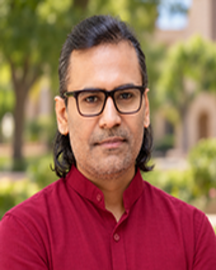
Dr. Kaeyoor Joshi is an Assistant Professor in the School Psychology Program at New Mexico State University and director of the New Mexico Student & School Transformation and Empowerment (NMSSTE) Lab. His research brings together developmental and cognitive neuroscience, psychometrics, neuropsychology, and preventive school mental health to understand how neurobiological and contextual processes shape young people’s learning, adaptation, and well-being. His interests also include neuromodulation and its potential relevance to cognition and mental health.
Dr. Joshi earned his Ph.D. in Psychology from the University of Nebraska–Lincoln, where he pursued dual specializations in Developmental Psychology and Quantitative, Qualitative, and Psychometric Methods, with an emphasis in Educational Neuroscience. His training also includes doctoral coursework in an APA-accredited School Psychology program, where he advanced to ABD status, and a 2,000-hour APA-accredited internship program. He is a Diplomate of the American Board of School Neuropsychology and a Nationally Certified School Psychologist. His research is informed by contextual behavioral science, with a particular focus on psychological flexibility and how cognitive processes support adaptation.
Through the NMSSTE Lab, Dr. Joshi collaborates on research that connects brain and behavioral measures to culturally responsive assessment. His current work includes an MRI study examining factors associated with suicidal thoughts among traumatized children and adolescents, and a psycho-oncology trial in India. His broader research program includes psychometric evaluation and adaptation of measures for multilingual populations, executive functioning and psychological flexibility, and physiological indicators of self-regulation.
Dr. Joshi has long-term training in Acceptance and Commitment Therapy and Trauma-Focused Cognitive Behavioral Therapy. He serves on the Association for Contextual Behavioral Science’s Developing Nations Committee and co-chairs the Asia Pacific Committee of the International School Psychology Association. He shares his work through conference presentations, invited talks, and professional training in the United States and India.
Outside the lab, Dr. Joshi enjoys the 3M’s: mountaineering, meditation, and music-a balance of climbing up, sitting still, and tuning in.
Recent Publications:
Clark, C. A. C., de Almeida, P., & Joshi, K. (2024). Preschool children’s heart rate variability across contexts of low and high emotional challenge correlates with their self-regulation performance. Infant and Child Development, 33(1). https://doi.org/10.1002/icd.2507
Simon, J. B., Nail, P. R., Swindle, T., Bihm, E. M., & Joshi, K. (2016). Defensive egotism and self-esteem: A cross-cultural examination of the dynamics of bullying in middle school. Self and Identity, 16(3), 270–297. https://doi.org/10.1080/15298868.2016.1232660
Selected Works in Progress:
Joshi, K. R., Joshi, A., Clark, C., & Pithva, Y. (2026). Thinking flexibly, living flexibly: Executive functions, psychological flexibility, and adolescent mental health in India [Manuscript in preparation].
Joshi, K. R., Joshi, A., Clark, C., & Pithva, Y. (2026). Mapping the mechanics of psychological flexibility in Indian adolescents [Manuscript in preparation].
Joshi, K. R., Joshi, A., & Clark, C. (2026). Psychometric properties of a bilingual adaptation of the UCLA PTSD Reaction Index for DSM-5 among Indian adolescents [Manuscript in preparation].
Joshi, K. R., Pithva, Y., Bidarkar, S., & Sargara, P. (2026). Factor structure and measurement invariance of the Comprehensive assessment of Acceptance and Commitment Therapy processes (CompACT) in two Indian samples [Manuscript in preparation].
Academic Background:
Ph.D. The University of Nebraska–Lincoln
